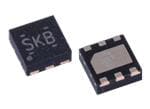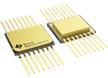

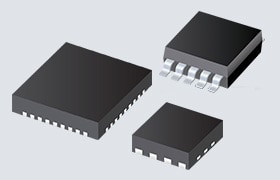

TPS25200DRVT

Texas Instruments
595-TPS25200DRVT
TPS25200DRVT

Fabricante:

Descripción:
Controladores de voltaje intercambiables en caliente 6.5V/2.8A eFuse w/ O vervtg Clamp A 595- A 595-TPS25200DRVR

Modelo ECAD:
Descargue Library Loader gratis para convertir este archivo para su herramienta ECAD. Conozca más sobre el modelo ECAD.

En existencias: 968

Existencias:
968
Se puede enviar inmediatamente
En pedido:
2,250
Se espera el 7/08/2026
Plazo de entrega de fábrica:
16
Semanas Tiempo estimado de producción de fábrica para cantidades superiores a las que se muestran.
Se establece un tiempo de entrega prolongado para este producto.
Mínimo: 1   Múltiples: 1   Máxima: 140
Precio unitario:
$-.--
Precio ext.:
$-.--
Est. Tarifa:
Empaque:
Envase tipo carrete completo (pedir en múltiplos de 250)

Precio (USD)

Cantidad Precio unitario
Precio ext.
Cinta cortada / MouseReel™
$1.22 $1.22
$0.879 $8.79
$0.796 $19.90
$0.703 $70.30
Envase tipo carrete completo (pedir en múltiplos de 250)
$0.703 $175.75
† $7.00 Se agregará y calculará la tarifa de MouseReel™ en su carrito de compras. Ningún artículo de MouseReel™ se puede cancelar ni devolver.

Embalaje alternativo

N.º de artículo del Fabricante:
Embalaje:
Reel, Cut Tape, MouseReel
Disponibilidad:
En existencias
Precio:
$0.99
Mín.:
1

Producto similar

Texas Instruments TPS25200DRVR
Texas Instruments
Controladores de voltaje intercambiables en caliente 6.5V/2.8A eFuse w/ O vervtg Clamp A 595- A 595-TPS25200DRVT

Atributo del producto Valor de atributo Seleccionar atributo
Texas Instruments
Categoría de producto: Controladores de voltaje intercambiables en caliente
RoHS:  
Controllers & Switches
2.9 A
6.5 V
2.5 V
1 Channel
1 mA
- 40 C
+ 125 C
SMD/SMT
WSON-6
Reel
Cut Tape
MouseReel
Yes
Marca: Texas Instruments
Tensión de entrada / alimentación - Máx.: 2.5 V
Tensión de entrada / alimentación - Mín.: 6.5 V
Sensibles a la humedad: Yes
Tipo de producto: Hot Swap Voltage Controllers
Serie: TPS25200
Cantidad de empaque de fábrica: 250
Subcategoría: PMIC - Power Management ICs
Peso de la unidad: 9.700 mg
Productos encontrados:
Para mostrar productos similares, seleccione al menos una casilla de verificación
Seleccione al menos una de las casillas de verificación anteriores para mostrar productos similares en esta categoría.
Atributos seleccionados: 0

Esta funcionalidad requiere que JavaScript esté habilitado.

Códigos de cumplimiento
CNHTS:
8542399000
CAHTS:
8542390000
USHTS:
8542390090
JPHTS:
854239099
TARIC:
8542399000
MXHTS:
8542399999
ECCN:
EAR99
Clasificaciones de origen
País de origen:
Filipinas
País de origen del ensamblaje:
Filipinas
País de difusión:
Estados Unidos
El país está sujeto a cambios en el momento del envío.

TPS25200/TPS25200-Q1 5V eFuse

Texas Instruments TPS25200/TPS25200-Q1 5V eFuse is an eFuse that comes with a precision current limit and overvoltage clamp. The device provides robust protection for load and source during overvoltage and overcurrent events. The TPS25200/TPS25200-Q1 is an intelligent protected load switch with VIN tolerant to 20V. If an incorrect voltage is applied at IN, the output will clamp to 5.4V to protect the load. If the voltage at IN exceeds 7.6V, the device disconnects the load to prevent damage to the device and/or load.

LM5060 High-Side Protection Controllers

Texas Instruments LM5060 High-Side Protection Controllers with Low Quiescent Current offers intelligent control of a high-side N-channel MOSFET during normal on/off transitions and fault conditions. The constant rise time of the output voltage results from the inrush current control. Both an Input UVLO (with hysteresis) and a programmable input OVP are provided, with an enable input offering a remote on or off control. The initial start-up VGS fault detection delay time, the transition VDS fault detection delay time, and the continuous over-current VDS fault detection delay time is programmed from a single capacitor. The MOSFET is latched off until either the enable input, or the UVLO input is toggled low and then high when a detected fault condition persists longer than the allowed fault delay time.