A Complete Power Solution for Automotive USB Ports
Source: Texas Instruments
With the proliferation of USB ports in new cars, providing power for each of these ports becomes more important and
more cumbersome. Their sheer number and disparate locations require a robust, simple and low-cost solution to enable
the fastest design time for the original equipment manufacturer (OEM) and maximum functionality for the end user.
Since a step-down converter running off the main car battery usually powers the USB ports, the converter must
either tolerate or be protected from the inevitable voltage excursions or spikes on the car battery. Only a
higher-rated voltage step-down converter will tolerate higher battery voltages and continue operation during the
battery voltage spike.
Because most USB ports just charge portable device batteries, passengers usually tolerate a brief disruption of
power delivery. Therefore, you can protect the step-down converter from brief periods of higher battery voltage with
an overvoltage protection circuit instead of designing a step-down converter to withstand the overvoltage. The
overvoltage protection circuit disconnects the step-down converter from the battery whenever the battery voltage is
too high. If surviving an overvoltage on the input is required, you must use this type of circuit with a lower-rated
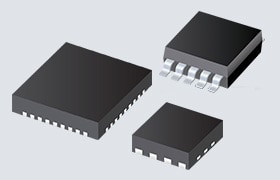
voltage device such as the TPS62130A-Q1 step-down
converter. This automotive device accepts up to 17V and delivers 3A of current. Through its synchronous
rectification, it is efficient; its 3mm-by-3mm package is small for a converter of its power level.
Besides tolerating or being protected from higher battery voltages, many USB ports also need the capability to
regulate 5V at the USB port to meet the USB specification, even among variations in load current and the
corresponding variable voltage drop across the wiring in the car. This cable-drop compensation is especially
important for those USB ports that locate the step-down converter in the engine control unit (ECU) and not near the
actual USB ports throughout the vehicle. A clear advantage of placing the step-down converter in the ECU is that a
single printed circuit board (PCB) contains all of the electronics instead of having numerous individual PCBs for
each USB port — this saves cost. A disadvantage is that cable-drop compensation is then necessary for each
step-down converter.
To overcome this disadvantage, the TPS2549-Q1 USB port
charging-controller incorporates three useful functions: current-limiting circuitry to protect the port from
overcurrent conditions, the negotiation required to communicate between the USB device and USB host, and a dedicated
pin that allows simple cable-drop compensation implementation. The pin easily interfaces with any step-down
converter to adjust its output voltage as the USB port's current draw varies.
The TI Designs Automotive USB Charging Port Supply Reference Design with Charging Controller and Cable Compensation
demonstrates all of the required functionality for a USB port — overvoltage protection, step-down converter
and USB charging controller with cable-drop compensation support — on a single PCB.